

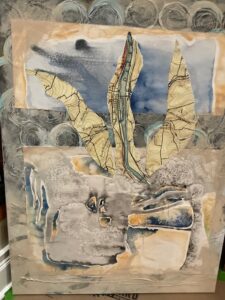
A place can remain with us long after we leave it.
It may return in the blue-gray color of a familiar river, the warmth of sunlight against an old brick wall or the sound of footsteps on a street we once walked every day. Sometimes, all it takes is a certain color or texture to bring an entire chapter of life rushing back.
Art has the remarkable ability to preserve those connections. It can represent where we live now, where we work, where we grew up, or a place that helped shape who we became.
The Places That Become Part of Us
Our surroundings quietly influence our identities. The architecture, landscape, weather, colors and materials of a place become part of the way we understand the world.
For someone who grew up near Philadelphia, memory might live in weathered brick, industrial metal, rowhome facades, historic stone or the colors of the city at dusk. A piece of watercolor art inspired by Philadelphia might capture the softness of the skyline, the movement of the Schuylkill or Delaware River, or the subtle change of light across a familiar neighborhood.
In Lambertville, inspiration may come from the Delaware River, the towpath, historic buildings, changing seasons and the creative energy shared by the town’s artists, galleries and visitors.
Elsewhere, home might be remembered through saltwater blues, farmland greens, desert ochres or the faded paint of a building passed every morning on the way to work.
These details may appear ordinary while we are living among them. Over time, they can become symbols of belonging.
Color Can Hold a Lifetime of Memories
Color is one of the most immediate ways art connects us to memory.
A deep blue may recall summers beside the ocean. A flash of red might evoke a family kitchen, a childhood bicycle or an old neighborhood storefront. Muted greens can bring back wooded paths, while gold and amber may suggest autumn afternoons, changing fields or the warm light inside a familiar home.
These responses are deeply personal. Two people can look at the same color and experience entirely different memories.
That is part of what makes collecting original art so meaningful. A painting does not have to depict a place literally to represent it. Its palette, movement and atmosphere may be enough to create an emotional connection.
The artwork becomes more than something displayed on a wall. It becomes a doorway to a time, person or place.
Materials Tell Their Own Stories
The materials used in a work of art can be just as evocative as its subject.
Watercolor creates transparency, movement and softness. Paint can capture shifting light and layered emotion. Ceramic may suggest the earth, the handmade and the enduring. Glass can reflect fragility or transformation. Resin preserves layers beneath its surface, while found objects carry traces of their previous lives into something entirely new.
Mixed-media art brings these materials together, allowing one work to hold multiple histories.
A fragment of paper, a weathered object or a reflective surface can communicate something that paint alone cannot. These materials invite us to look closely and consider how experiences accumulate over time. Like people and places, they carry marks, imperfections and evidence of change.
Art for the Places Where We Live and Work
Art inspired by place can create a powerful sense of connection within both homes and workplaces.
In a home, it can honor a hometown, commemorate a move or keep a meaningful landscape close. It may remind someone of childhood summers, a favorite city or the community where a family began.
In a workplace, locally inspired art can establish a sense of identity. It can connect an office, hotel, restaurant or gathering space to the community around it. Rather than feeling generic, the environment begins to tell a story about where it belongs.
The most memorable spaces often include artwork that feels personal to their location. It may reference regional colors, architectural materials, natural landscapes or shared history without relying on a literal depiction.
Art, Place and American Freedom
As the United States approaches its 250th anniversary, artists and communities have an opportunity to consider what American freedom means today.
Freedom can be represented through familiar national imagery, but art also allows us to explore the idea more personally. It may appear in the freedom to travel, build, create, speak, gather or begin again. It can be found in stories of exploration, perseverance and renewal.
American freedom art can also reflect the many places and experiences that form the country’s identity. From large cities and industrial communities to coastal towns, rural landscapes and neighborhoods shaped by generations of families, there is no single image of America.
Its story is made from layers.
Color, texture, light and found materials can help artists explore those layers—celebrating progress while also making room for reflection, complexity and hope.
Finding Art That Feels Like Your Story
When choosing artwork, begin with the emotional connection rather than the room’s color scheme.
Ask yourself:
- Does this artwork remind me of somewhere important?
- Do its colors bring a specific memory to mind?
- Is there a material or texture that feels familiar?
- Does the work represent a place I came from—or the life I am building now?
- How do I feel when I stand in front of it?
The right work of art does not simply match a space. It changes the way the space feels.
It may become a reminder of home, a celebration of a new beginning or a connection between different periods of your life.
Discover Original Art in Lambertville
For visitors seeking an art gallery in Lambertville, Firehouse Studios offers a setting where original artwork, history and community come together. Located in a reimagined historic firehouse, the studio presents work shaped by memory, material, identity and the experience of place.
Whether you are drawn to Philadelphia-inspired artwork, coastal colors, sculptural forms, illuminated pieces or richly layered mixed-media art, the most meaningful choice is often the one that makes you remember something.
A color can recall a season.
A texture can bring back a landscape.
A material can preserve a story.
And a single work of art can hold the thoughts of a lifetime.
Explore the original artwork at Hello Artists and discover a piece that connects you to where you have been, where you are now and where you are going next.